
Measurement Book Meaning: What an MB Is in Construction
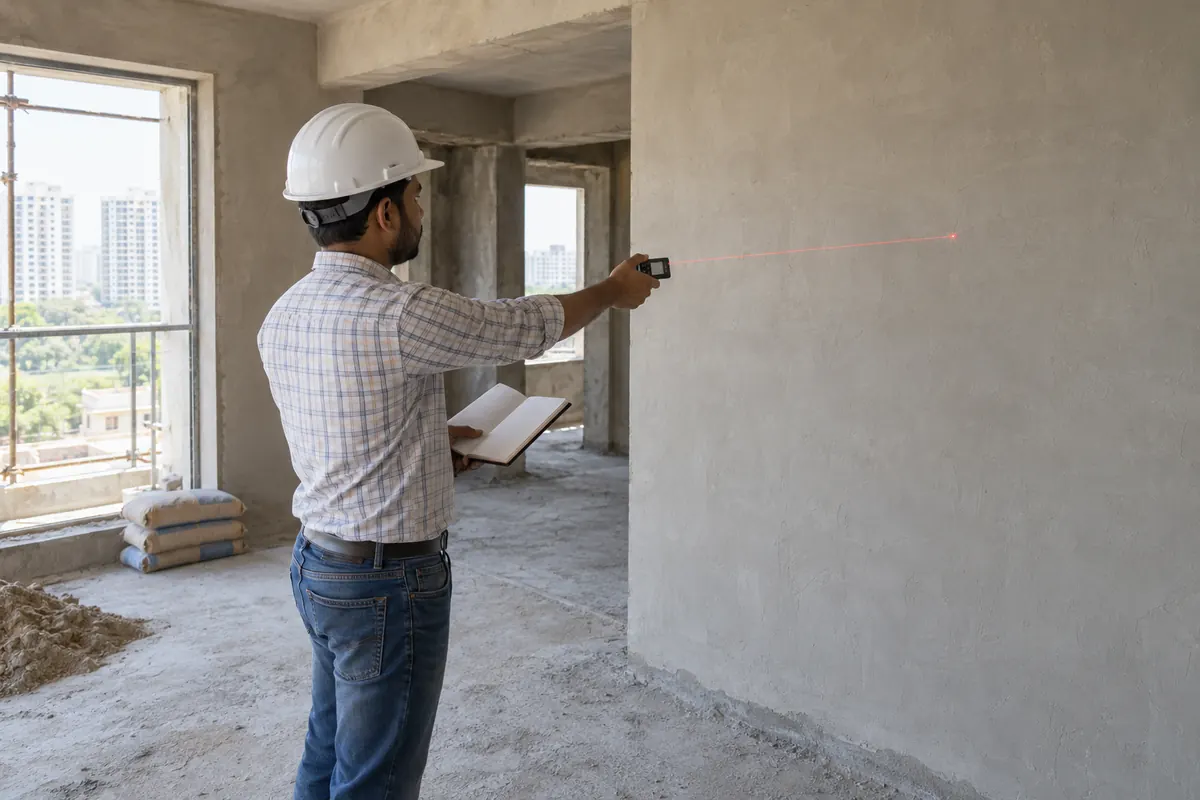
A measurement book, or MB, is the official site record of completed construction work and its measured quantities. In civil engineering, it is used to check how much work was actually done before preparing or approving payment.
The MB may be a physical register, an Excel file or a digital record. It normally contains the location of work, item description, dimensions, quantity, measurement date and checking details. For example, it may record the length, width and depth of excavation or the area of completed plaster.
An MB should record actual work, not an estimate. The quantity in the BOQ may say what is planned. The MB says what has been completed and measured at site.
Why the MB decides payment
Construction payments are often linked to measured quantities. A contractor may complete part of a BOQ item during a billing period. The engineer measures that work and enters it in the MB. The verified quantity then becomes the basis of the running account bill, commonly called the RA bill.
Suppose the BOQ contains 2,000 square metres of internal plaster. The mistri reports that one floor is complete. The engineer measures the walls and finds that 430 square metres are payable after applying the agreed measurement rules. The bill should normally use the checked quantity of 430 square metres, not the full BOQ quantity.
This makes the MB important for several reasons:
- It gives evidence for the quantity claimed in a bill.
- It helps prevent payment for incomplete or unmeasured work.
- It records work that may later become hidden, such as reinforcement or foundations.
- It supports contractor settlement and client billing.
- It helps explain differences between planned and executed quantities.
- It creates a record for later checking, certification or audit.
A weak MB can delay payment even when the work is complete. If dimensions, dates or locations are missing, the checker may return the bill. Good measurement records make the discussion specific: the parties can review an item, location and quantity instead of relying on memory.
Who records and who checks
The exact responsibility depends on the contract and company process. In many projects, a site engineer, quantity surveyor or billing engineer records the measurement. A contractor’s engineer may prepare the first measurement, while the client’s engineer or consultant checks it.
The person recording the MB should identify the work clearly. Writing only “brickwork completed” is not enough. A useful entry identifies the building, floor, room, grid, wall or other measurable location. It also records dimensions and the calculation used to reach the quantity.
The checker should verify more than arithmetic. The checker may confirm that the work exists, matches the approved scope and has been measured under the agreed rules. For concealed work, checking should happen before the work is covered. Photos can support the record, but a photo alone usually does not replace dimensions and calculations.
The contractor or subcontractor should also review the entry. Joint measurement reduces later disputes. If one side disagrees, the objection and corrected quantity should be recorded clearly. An overwritten figure without any explanation creates doubt.
The munshi may help with labour details, and the storekeeper may confirm material movement. However, hajiri, challans and stock entries do not prove the executed quantity by themselves. They support site control, while the MB records measurable work.
MB, BOQ and RA bill: how they connect
Stop juggling WhatsApp groups, Excel sheets, and paper registers
Trackovo runs every part of your construction site in one app — materials, attendance, finance, vendor payments. 14-day free trial. No card needed.
Start your free trial →The MB, BOQ and RA bill serve different purposes. They connect through a simple flow:
- BOQ: Lists the planned work items, units, estimated quantities and agreed rates.
- Site execution: Labour, materials and machines are used to complete part of the work.
- Measurement: The engineer records actual dimensions and quantities in the MB.
- Checking: The authorised person verifies the location, calculation and accepted quantity.
- RA bill: The verified quantity is billed at the applicable contract rate.
- Certification and payment: Deductions, taxes, retention and previous payments are considered before the payable amount is approved.
The BOQ is therefore the commercial reference, while the MB is the quantity evidence. The RA bill converts verified progress into a payment claim. A BOQ system can help organise items and quantities, but site measurement still needs proper checking.
Executed quantity can be lower or higher than the original BOQ quantity. A difference does not automatically mean that either record is wrong. Drawings may change, actual site conditions may differ, or extra work may be approved. Such changes should have clear instructions and supporting records.
Common MB problems
Vague locations: An entry such as “plaster work, second floor” may be difficult to verify. Room numbers, wall references or grid lines make the record clearer.
Missing dimensions: A final quantity without length, width, height, depth or count gives the checker no calculation trail.
Late measurement: Work may become concealed by concrete, plaster, tiles or backfilling. Measuring it later can require assumptions and cause disputes.
Duplicate quantities: The same area or item may be included in two bills. Previous certified quantities should be visible when the current bill is prepared.
Wrong units: Running metres, square metres, cubic metres, kilograms and numbers cannot be treated as interchangeable. The MB unit should match the BOQ item or show a valid conversion.
No deduction details: Openings, voids and excluded portions may need deductions under the contract’s measurement rules. The calculation should show how they were treated.
Unclear corrections: Silent changes make a record hard to trust. A correction should preserve the earlier trail and identify who changed or approved it.
No link to the BOQ item: Similar descriptions can cause a quantity to be billed under the wrong rate. Use the BOQ item number wherever possible.
Measurements spread across chats: Dimensions kept only in WhatsApp messages, loose papers or personal notebooks are difficult to consolidate. A controlled register gives the office and site team one reference.
What an MB format should contain
A practical measurement book format should capture the project, MB number, date, BOQ item number, work description and exact location. It should then provide space for the number of units, length, width, height or depth, calculated quantity and unit of measurement.
It should also show who measured the work, who checked it and when it was approved. Remarks can explain deductions, drawing references, extra items or unusual measurement rules. Supporting photos and document references are useful when the work will later be hidden.
A spreadsheet works well for small teams because it is familiar, flexible and easy to start. It can also perform quantity calculations. Teams using sheets should control file versions, protect formulas and decide who can change certified entries. The available construction Excel templates can help teams organise related site records.
As the number of projects and bills grows, a shared system can reduce scattered files. Trackovo includes a measurement book along with materials, labour, expenses, tasks and daily progress. It can keep site records connected, but it does not remove the need for an engineer to inspect and verify the work. Teams comparing broader options can review its features and the BOQ software page.
Common questions
What is the full form of MB in construction?
MB means Measurement Book. It is a record of actual construction work measured at site, including descriptions, dimensions, calculated quantities and checking details.
Is an MB the same as a BOQ?
No. A BOQ lists planned items, estimated quantities and rates. An MB records the quantities actually completed and measured. The BOQ is a scope and pricing reference; the MB supports billing for executed work.
Who should sign a measurement book?
The required signatories depend on the contract. Commonly, the person who measures, the contractor’s representative and the authorised client engineer or consultant record or confirm the entry. Follow the approval process written in the work order or contract.
Can a measurement book be maintained digitally?
Yes. An MB can be maintained in Excel or site-management software if entries remain clear, traceable and available for checking. The team should control access, preserve corrections and keep supporting records. Digital entry does not replace physical verification of completed work.
Ready to stop the WhatsApp chaos? Try Trackovo free for 14 days.
Start free trial →