
RA Bill Meaning: What a Running Account Bill Is
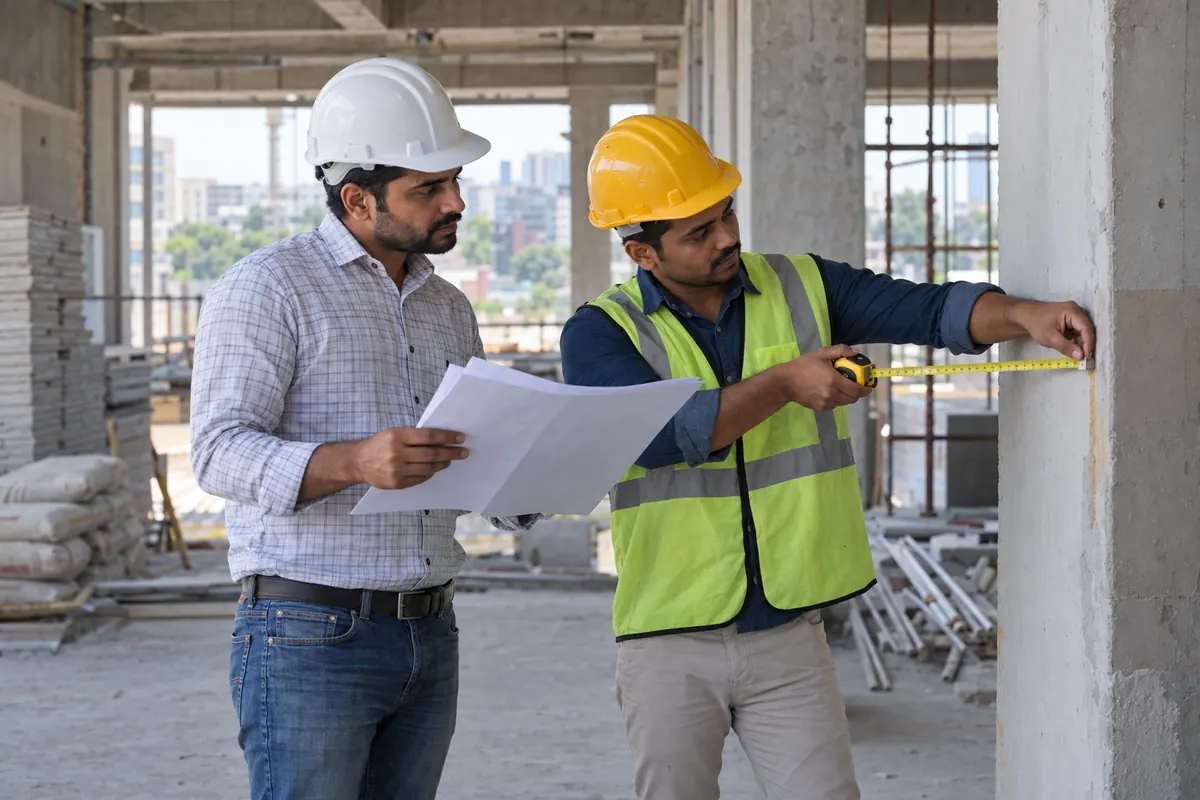
RA bill means Running Account bill. It is an interim bill raised for construction work completed and measured up to a particular date.
An RA bill allows a contractor to receive payment while the project is still running. The contractor does not wait until the full work is finished. The client or owner checks the executed quantity, applies the agreed rates and pays the approved amount after deductions.
RA bills are common in building, civil and interior contracts. They help the contractor manage labour wages, material purchases, vendor payments and daily site kharcha. Each bill also creates a record of progress and payment.
How an RA bill works step by step
1. Measure the completed work
The site engineer measures the work completed during the billing period. For example, the team may measure concrete in cubic metres, plaster in square metres, steel in kilograms and doors in numbers. The measurements should be entered in the measurement book with the date, location and item description.
The quantity must represent work actually completed at site. Material lying at site is normally not treated as executed work unless the contract specifically permits payment for secured material.
2. Check the measurements
The client engineer, architect, project manager or quantity surveyor checks the recorded measurements. Joint measurement is useful because both parties can confirm the length, width, height, count and location together.
Any hidden work should be measured before it is covered. Examples include reinforcement before concreting, waterproofing before screed and electrical conduits before plaster. Photos, drawings and inspection records can support the measurement.
3. Prepare the bill
The contractor applies the accepted BOQ rate to each approved quantity. The basic calculation is simple: current quantity multiplied by the agreed rate equals the current value.
An RA bill is usually cumulative. It shows the total work completed up to the current date, the value already certified in previous bills and the amount claimed in the present bill. This reduces the risk of billing the same work twice.
If the scope is based on a BOQ, keep item codes and descriptions consistent. The BOQ Excel guide for Indian contractors explains how item descriptions, units, quantities and rates are organised.
4. Apply deductions and adjustments
The gross work value is not always the payable amount. The client may deduct retention, mobilisation advance recovery, material advance recovery, previous overpayment or other amounts allowed by the contract. GST and TDS should be handled according to the contract and applicable rules.
Do not add a deduction only because it is common on another project. The contract, work order and written amendments should decide which deductions apply and how they are calculated.
5. Certify and pay
After checking, the authorised person certifies the accepted value. The certified amount may differ from the contractor’s claimed amount. The client then records the payment against that RA bill.
Both sides should preserve the submitted bill, checked measurement, certification, deduction details and payment proof. Site-wise payment and expense records make later reconciliation easier. Trackovo includes a site finance management module and a measurement book, along with tasks and daily progress records.
RA bill vs final bill vs advance
| Point | RA bill | Final bill | Advance |
|---|---|---|---|
| Meaning | Interim claim for measured work completed to date | Last claim after completion and final measurement | Money paid before the related work is completed |
| Timing | Raised periodically during the project | Raised at the end of the contracted work | Paid near the start or before a defined activity |
| Basis | Checked quantities and agreed rates | Final accepted quantities, rates and adjustments | Contract terms, guarantee or agreed payment condition |
| Previous payments | Previous certified value is deducted from the cumulative value | All earlier bills and recoveries are reconciled | The amount may be recovered from later RA bills |
| Project status | Work is still in progress | Work is complete or the account is being closed | Work may not yet have started |
An RA bill is therefore not a fresh independent bill for each month. It normally carries forward the cumulative work value. A final bill closes the remaining quantities, variations, recoveries and payments. An advance is different because it is not payment for already measured work.
What owners check before paying
Stop juggling WhatsApp groups, Excel sheets, and paper registers
Trackovo runs every part of your construction site in one app — materials, attendance, finance, vendor payments. 14-day free trial. No card needed.
Start your free trial →Owners should first compare the claimed quantity with the measurement book and actual site condition. The item code, description, unit and rate should match the accepted BOQ or work order. Any non-BOQ item should have written rate approval.
The checking team should confirm whether the current quantity is reasonable against drawings and physical progress. It should also verify that rejected, damaged or incomplete work has not been included. A daily progress record can help connect billed quantities with work reported from site.
Previous certification is another important check. The cumulative value in the new bill should agree with the previous certified bill. The checker should look for duplicate areas, repeated quantities and incorrect carry-forward figures.
Deductions need a clear calculation. Retention, advance recovery, material recovery, TDS and other adjustments should be shown separately. Payment terms and approval authority should follow the signed contract. If the contractor submitted a variation, the owner should check its written approval before including it.
Owners may also check supporting documents such as inspection approvals, test reports, photographs and material challans where relevant. These records support the claim, but they do not replace physical measurement.
Full RA bill format and columns
A practical RA bill starts with project details. Include the project name, client, contractor, work order number, RA bill number, billing period, submission date and contract value. Also state whether the figures are before or after tax.
The item section should contain the BOQ item number, work description, unit, contract quantity and contract rate. It should then show previous quantity, current quantity and cumulative quantity. Add corresponding previous, current and cumulative values.
After the item section, include a summary of the gross cumulative value. Show the value certified in previous RA bills and subtract it to find the present gross amount. List every deduction separately rather than combining all deductions into one figure.
The summary may include retention, advance recovery, material recovery, taxes and any approved debit or credit adjustment. Finish with the net amount payable and the amount in words. Provide spaces for preparation, checking, certification and approval, with names and dates.
The detailed measurement sheets should remain traceable to each bill item. Use clear references such as floor, room, grid, drawing number or work location. Contractors working in Excel can also use structured construction Excel templates, but formulas and version control need careful checking.
A sheet works well for a small project when one responsible person maintains it. As projects and billing records grow, an app can reduce scattered files. Trackovo provides a measurement book, site-wise finance records, tasks and daily progress in one app on Android, iPhone and web. It does not provide design or 3D tools, and its Tally facility is an export rather than a live integration. See the available features before deciding what fits your process.
Common questions
What is the full form of RA bill?
RA stands for Running Account. An RA bill is a periodic bill for measured and accepted work completed while the contract is still running.
Is an RA bill the same as an invoice?
Not exactly. The RA bill establishes the measured work value and contractual deductions. A tax invoice may be raised based on the certified amount and the agreed tax process.
Can an owner reduce the amount claimed in an RA bill?
Yes, if measurements, rates, quality or contract conditions do not support the full claim. The owner should record the reason and show the certified quantity, value and deductions clearly.
Is an RA bill the final payment?
No. It is normally an interim payment. The final bill is prepared after the work and final measurements are completed, with all earlier payments, recoveries and approved variations reconciled.
Ready to stop the WhatsApp chaos? Try Trackovo free for 14 days.
Start free trial →